FROM RIGA UNDERGROUND LEADER
IMANT SUDMALIS TO HIS WIFE AND CHILDREN
p 6 Upmalas St., Liepaya. To be sent after the war.
p IV. 1944
p Marusenka,
p Hardly likely that you will receive this, my last letter, but you might all the same!
p On April 13, I was sentenced to death, I don’t know the date today, the days are all mixed up. But a lot of time has passed since the trial, it must be about April 28 and I’m thinking that it may well be our little Aijuk’s birthday today-six years old now—and maybe I shall be taken out to be shot tonight.
p They don’t give me any books, I’m alone in the empty, solitary central prison, I’ve got plenty of time to think over the past. I look back to the past and see what a terrific amount we’ve been through in these short years, I recollect many wonderful minutes. And these memories of the tight spots I’ve been in, of the peaceful, sunny hours with youthese memories help me now. I don’t regret the path I have come... .
p There could be so much to say and write about but I have no pencil-I found a tiny piece of chipped lead in my pocket and I’m writing with that.
p You’ll probably never know what fence I’ll be buried under, it doesn’t really matter much-the same old earth will cover us all. I have an idea, my love, that after the war you’ll go back to our dear Latvia. And there, sometime in the evening after your day’s work, remember that once upon 195 a time there was a man named Imis who loved you-tell Aijuk and Sarmuk something about him.
p Bring our laddies up the right way, Marusenka, teach them to love the future in which they will live and for which so much blood has been shed.
p Give Aijuk and Sarmuk a caress for me, good-bye Marusenka, we’ll see each other no more. Don’t want to die yet, but believe me-I know how to die in the proper way. The Gadfly, too, was shot in the spring when the young grass was pushing through. Look after yourself and try to be happy, Marusenka. Don’t take it too badly.
p Your Imis
May 25, 1944
p Dear Marusenka, Aijuk, Sarmuk,
p Can’t tell whether you’ll ever read my final words, but I’m writing anyway. In a couple of hours I’ll be executed. The trial was on 13th May, [195•* so I’ve had a fair amount of time to ponder over my life. When I look back over the days gone by, I have nothing to reproach myself for. I acted like a man and a real fighter in those fateful days.
p If only the future is lovely and happy, it certainly should be! All that blood surely cannot have been shed in vain.
p Don’t drown yourself in sorrow, my Marusenka, no one has yet ever lived eternally. Bring up Aijuk and Sarmuk so that they remember me sometimes, so that their lives are happier and better.
p Look after yourself, Marusenka, thanks for all the good you gave me. And please give Aijuk and Sarmuk a hug for me.
Imis
p Imant Sudmalis was a Latvian partisan, the brains behind the Riga resistance movement.
As secretary of the Liepaya District Y.C.L. Committee and member of the Central Committee of the Latvian Communist Party, he immediately took his stand in the front ranks of the fight against the nazi invaders. On the second day of war, the Liepaya young people formed a rifle company headed by Imant Sudmalis and Boris Pelnen, secretary of the Liepaya Y.C.L. Committee. Liepaya workers’ detachments and Soviet soldiers and sailors who made up the small 196 garrison in the town put up a staunch resistance for five days. Imant Sudmalis turned out to be an excellent machine-gunner and daring commander. After the fall of Liepaya he headed a group of young fighters who broke through the besieged port area and went underground in Kurzeme.
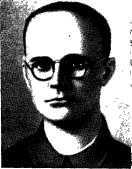
Imant Sudmalis
p After a few months in Kurzeme, Imant Sudmalis made his way back to Riga where he set about establishing an underground organisation. In the spring of 1942, a decision was taken to send him across the front to report on the results of resistance work and receive fresh instructions. He set off in May of the same year. He met up with Alexander Grom’s partisan group then operating in the Byelorussian forests. They helped him to cross the front line and by autumn he was in Moscow.
p In November, a Latvian partisan detachment was formed in the Soviet rear. Imant Sudmalis was appointed Party organiser. At the beginning of December, when the Russian winter was at its worse, the detachment crossed the front at a point called Velikiye Luki and made a 200-mile incursion into the Kalinin Region eventually setting up a base in a forest in Byelorussia on the border with Latvia. From December 1942 to January 1943, the detachment succeeded in uniting the Ludzen and Daugavpils partisan groups operating along the border. By its actions, the detachment created a base for future activity of the Operative Group of the Central Committee of the Latvian Communist Party-the organisational headquarters for the underground movement in Latvia. On March 22, 1943, a Latvian partisan brigade was formed on the basis of this detachment.
p On July 20, 1943, Imant Sudmalis, on the authorisation of the Latvian Y.C.L. Central Committee, returned to Riga where he became head of the underground groups, directing and extending their activities. He established contacts between the Riga underground and the partisan units in North Latvia, and took part in many dangerous operations. The most outstanding of them was the foiling of the "Latvian People’s Protest Meeting" which the Germans had intended to stage in connection with the work of the Moscow Conference of the Allies, which had discussed questions concerning the Baltic area. The meeting was due to be held on November 13, 1943, on Riga’s Domskaya Square. Reichskommissar Loze, one of Hitler’s top-ranking officers, was billed to address the meeting. At 10 in the morning a bomb exploded on Domskaya Square which the resistance men had 197 planted under the platform. The meeting’s organisers took to their heels. Utilising the ensuing hubbub, the crowd evaded the police cordon and scattered. The nazis put up a sum of 30,000 imperial marks for the head of the man responsible for the explosion. But Imant was elusive. In December he was responsible for the starting up of an underground print-shop in Riga.
p The Gestapo did all they could to wipe out the Riga underground organisation. In February 1944, mass arrests began. Sensing that a provocateur had penetrated the resistance, Imant Sudmalis ordered the abandonment of all the old secret apartment hide-outs, disbanded the underground groups and dispatched all possible underground suspects to the partisans. The complete destruction of the underground was staved off but Imant himself was seized by the. nazis and on May 25, 1944, at 6 o’clock in the evening, was hanged in the cell of the fifth block of the Riga prison.
p Imant Sudmalis was posthumously awarded the title of Hero of the Soviet Union.
His letters, written in Latvian to his wife Maria, were discovered after the war in a crack in the wall of his death cell.
Notes
[195•*] The trial was, in fact, on 13th of April.
| < | > | ||
| << | >> | ||
| <<< |
WALL INSCRIPTIONS
IN TALLINN GESTAPO GAOL |
VOLODYA USTRITSOV'S NOTE
FROM A NAZI GAOL IN PESHIN |
>>> |