FROM INTELLIGENCE GIRL ZOYA KRUGLOVA
Not later than September 9, 1943
INSCRIPTION IN A CELL
I used to love freedom and the wide open spaces, that’s why it’s very hard to get used to being locked up. In Greek, my name, Zoya, means life. Oh, how I want to live, live, live___Zoya Baiger (Kruglova).
LETTER HOME
p My dear Mum and Dad, dear little sisters Valya, Panya and Shura and dear little brother Borya. I’m writing to you, darlings, from prison for the last time. You will receive this letter when I am dead.
p My darlings, it’s already a year since you received news from me,- I’ve been wandering about all the time but I never forgot about you. They arrested me in February and that makes two and a half months since I’ve been here alone in a solitary cell. Every day I expected to be taken out and shot. Mummie, things have been pretty grim but I endured it all. They sent me to a camp in Pskov where I stayed two months and escaped back to our side. I was again sent on a mission and again I ended up in this prison-this is the second month. I have been beaten about the head with sticks. Now waiting to be shot. I don’t think any more about living though, my dear ones, I very much want to live a bit if only to see you, give you a big hug and cry all my grief away on your breast, Mummie dear. In fact, if I hadn’t landed here a second time I would have been home in September. But, there it is, it’s no use crying over spilt milk. At least, I’ve done my duty. 163 My dear ones, you can be proud that I haven’t besmirched your good name and honour. I am going to die, but I know what for.
p Mummie, don’t take it too badly, don’t cry. I would have liked to have consoled you but I’m very far away and behind iron bars and thick walls. I frequently sing songs in gaol, and the whole prison listens. This is a song about my life and my sad end:
p
Don’t you weep, don’t weep,
my darling,
Don’t you grieve my Mother dear.
We shall beat the nazi bandits
And be home again, don’t tear.
But she died without returning
From her Ostrov prison cell.
By night they came and took her.
Shot her by the prison rail....
p My dear ones, other girls will tell you about me, if they survive. . . . Once more I beg you, please don’t cry, don’t despair. My last farewell to Auntie Liza, Uncle Vanya, Lena Almazova and every one of my friends, comrades and relatives.
p All my love to you all.
p Farewell forever.
p My body will be in Ostrov behind the gaol by the side of the road. I shall be clothed in my black woollen dress, which is a bit faded now, and the red knitted jumper you bought for me, my dear Mummie, and Russian boots.
p
Your daughter,
Zoya
Good-bye, good-bye. . ..
p Zoya Kruglova was born on April 23, 1923, in the village of Moshenskoye near Novgorod. She threw everything into the battle as soon as war broke out. Zoya took part in putting up defences and evacuating children from Leningrad, taught the local population what to do during air raids and, at the same time, took a course in nursing. In the autumn of 1941, she was appointed medical orderly to the 145th Anti-tank Battalion. Shortly after, she began work for the intelligence on the North-Western Front.
In the winter of the same year, she joined up with Anna Dmitriyeva and wireless-operator Panya Morozova in crossing the front. The Soviet High Command sent the girls to Soshikhin District, not far
164 from Pskov, to gather information about nazi troop movements on the Leningrad front. Having a good command of German, Zoya passed herself off as a German girl, Baiger, whose father was supposed to have been shot by the Bolsheviks in 1938. She succeeded in finding out valuable information about landing strips, the number of garrisons and the movements of enemy troops. This information was radioed back to H.Q.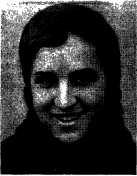
Zoya Kruglova
p After spending a brief leave at home, Zoya once more went behind the lines. In the company of a new wireless-operator, Zinaida Baikova (“The Wondergirl”), Zoya was flown to the town of Ostrov in the Pskov Region. Once in the town the girls managed to get hold of passports and find work: Zoya in a labour office and her friend as a cleaner in a military unit. The two girls made contact with the town underground and went into action. In November they transmitted four messages back to H.Q. After the arrest of underground leader Klava Nazarova, the nazis began to keep a closer watch on all suspects. At the commencement to 1943, Kruglova and Baikova were seized by the Gestapo. Without getting anything out of the two girls, the Gestapo sent Kruglova to a camp for condemned prisoners in Pskov and Baikova off to the Diisseldorf prison in Germany.
p Zoya escaped from the death prison and made her way back to the partisans, but as she was attempting to cross the front she fell into the hands of some provocateurs who passed as partisans and again found herself in the Ostrov gaol.
p In the nazi cell, Zoya conducted herself bravely. For more than a month the nazis put the girl through various tortures. As a fellow prisoner, A. Poyarkova, later testified, the girl was often brought back from questionings with her head and face covered in blood and bruises, but her spirit never sagged. She would often lament: "Oh, how I want to live!" She never gave death a thought. Many a time when she would sing, silence would descend on the gaol while everyone listened to her songs.
p Realising that this time there was no escape, Zoya did all she could to see that her parents received her last letter. With the aid of Dusya Demidova, she succeeded m sending a note to her sister whom she knew before her arrest. With the knowledge that her note had got through, Zoya sent her letter home in the same way.
At dawn on September 9, 1943, Zoya Kruglova was taken out with four members of the Ostrov underground and shot, four miles from the town, at a spot just off the main Ostrov-Palkino highway.
Notes
| < | > | ||
| << | >> | ||
| <<< |
LETTER
FROM SOVIET P.O.W.S IN THE CHISTYAKOV WAR CAMP |
LETTERS
FROM MEMBERS OF THE ZAPOROZHYE UNDERGROUND |
>>> |