FROM GEORGI SAVCHENKO, LEADER
OF DNIEPROPETROVSK UNDERGROUND
LETTER HOME
p Dear Mum and Dad and sister Tina,
p If we ever meet again-and even though things are pretty tough now I don’t lose hope-I’ll let you know a little more. For the time being I’m just writing a few words about what has happened to me in the past nine or ten months. This period in my life is a darn sight richer in experience than all the other years put together. In this time I’ve had to go through just about the lot-starting from my baptism of fire and ending with concentration camps. So I’ve seen quite a bit.
p Up to August we retreated, fighting, eastwards. Then our unit was surrounded and this is where things started. P.o.w. camp. Escape. A few days of freedom. Inside again. Out again. And inside again. This time I’m locked in the Bobruisk Fortress. They started to beat the living daylights out of me, after which I was about a fortnight on my back. I’d only just got over it when I had another go at getting out. I thought I’d make for Dnepropetrovsk to see you all and get back into the fray.
p Why am I doing all this?
p 1) I’m a Communist. Not just in words but after going through an extensive communist school. My Party card is my whole life to me, not a screen behind which one can hide from life’s tempests at the first moment of trial.
p 2) All the things I’ve been through force me to this decision. I grew up, studied and matured in Soviet times. That has 100 entered my blood and flesh. To live without or outside the Soviet system is simply unthinkable for me. I’ll fight might and mane to see the red flag flying again over our country and our Dniepropetrovsk and to get the country free of these gorillas, these bandits, these bloodsuckers. . ..
p Hatred makes my blood boil. No swine of a nazi I get my hands on will escape with his life. Death to the bastards who have besmirched our sacred land!
p If I don’t come back you will know I gave everything to liberate my country, I died for you, my dear ones.
p
I hope it is only “good-bye till we meet again”.
Lots of kisses,
Your loving son and brother,
Yuri
March 19, 1942
Dniepropetrovsk
NOTE TO HIS AUNT K. A. SHEPITKO
p Thanks for the bread and especially for the linen. Auntie dear. I’m so sorry I’ve caused you and everyone at home so much sorrow. It doesn’t look as if I’ll get out of here. We are all due to be shot today or tomorrow. But I’ve no regrets. We shall win all the same. Tell Klava to bring up Galya a decent and honest girl. She’ll have a hard time without her husband, and so will the little girl without her dad. Let’s hope she marries again if she finds a suitable chap. I lay down my life for my country.
Farewell.
NOTE TO HIS COMPANIONS
p Greetings friends,
p Thanks for all you’ve done for me. This note looks like being my last "will and testament".
p The case is already over and I’ll be pushing up the daisies today or tomorrow.
p If you can get to see my folks, give them a kiss for me.
p
Yours,
Yuri
p Once more please excuse the bother I’ve caused. I’d give anything to live. But I’ll go calmly in the knowledge that I’m not the only one and there will be thousands of others who’ll take my place.
p P.S. Wash out my linen and pass it on in a separate bundle. Don’t bring anything else.
December 21, 1942
p Up to the war Georgi Savchenko was an electrical fitter at the Petrovsky Works in Dniepropetrovsk. In 1939, he joined up, went through a military-political college and became a political instructor. In July 1941, his unit was encircled. In an attempt to break through to his own men he was taken prisoner. Thrice he made a break from captivity. Twice he was caught but the third time he managed to get back to his native town where, together with a group of youngsters, he formed a Party resistance group. At the beginning of February 1941, the organisation numbered more than a hundred.
p In a dark and dimly-lit cellar the resistance fighters rigged up a transmitter and began to listen in to the voice of Moscow. They jotted down the news, wrote out leaflets and distributed them around the town. The leaflets were signed simply: Committee C.P.(B.)U. (Communist Party [Bolsheviks] of the Ukraine).
p
At the outset to 1942, the Germans decided to set the town’s biggest factories in motion-including the Petrovsky, the Artyom and several
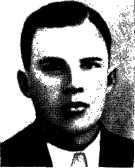
Georgi Savchenko
102
others. The resistance men and women intended to do all they could to foil the Germans’ plans. At the Petrovsky Plant an underground group was set up to sabotage operations. Once they managed to destroy the valuable cable which had arrived to the works. In the end, the Germans had to give up their idea of trying to make the factories work.
p In the spring of 1942, Savchenko was elected secretary of the underground town Party committee. Groups of young resistance fighters sprang up and established contact with the neighbouring settlements. The participants in the organisation worked out a plan for an uprising in the town and collected arms and ammunition in preparation. They blew up a gun-powder store, a fuel dump in Nizhnednieprovsk, and a number of other targets. They destroyed trains, lorries and killed German soldiers.
p Despite the desperate efforts of the Gestapo the underground remained a mystery to the Germans for some time. Finally, a spy succeeded in worming his way into one of the groups.
p The round-up commenced. In just one week more than 70 people were brought in.
p Georgi Savchenko managed to escape several times from under the very noses of the Gestapo, until he was finally arrested in October 1942 when, scorning danger, he was putting the resistance back on its feet. In early December the nazis shot a large group of resistance fighters on the outskirts of the town. Savchenko faced the firing squad at the end of January 1943 together with Nikolai Stashkov, secretary of the underground Party regional committee.
Georgi Savchenko’s letter was discovered in his old apartment on Krasnoflotskaya Lane. It was hidden behind the frame of a picture hanging next to a family portrait. He also managed to have two notes smuggled out of gaol. The first was to his aunt who was let out of prison shortly before his arrest. She persuaded the prison guard to pass on to her nephew a loaf of bread and a change of linen. An hour later the guard brought back the note hastily scribbled on a scrap of paper. The second note was smuggled out on a piece of cloth shortly before his execution.
Notes
| < | > | ||
| << | >> | ||
| <<< |
LETTERS FROM KONSTANTIN ZASLONOV,
COMMANDER OF ORSHA PARTISAN BRIGADE |
LETTERS
FROM MINSK RESISTANCE FIGHTERS IVAN KOZLOV AND GEORGI FALEVICH |
>>> |