LAST LETTER
p December 1943
p My dear son Garik,
p When you read this letter, many years will have passed, the thunder of war will have died down and a happy and joyful life will once again have blossomed over our liberated land, just as it did before the war. When you were a little boy, you used to lie in your cot and smile through your sleep; mama and I used to think how lucky you were, not having to go through what we had been through in our childhood years. I used to think of bringing you up a real man and was proud ot your first words, your first thoughts.
p Then came the terrible war and you and mama were evacuated beyond the Volga to save you from death, from the murderers of little children, and I went to defend our country. Probably to you our last meeting in March 1942 in a stranger’s hut in Kaisatskaya village was like a dream. You have waited for me a long time and I never came. Like hundreds of thousands of other fathers I died in combat with the cursed foe-the German fascists who invaded our country, broke up our peaceful life, bringing mountains of grief with them.
p But, though I die, I am deeply convinced that you, my beloved boy, will live in a free, flourishing country-a country of socialism; you will study in a Soviet school, make your way in life and, like me once upon a time, will learn about the war days from history, read stories about the daring exploits of war heroes. And you, my dear little boy, need not blush for me, for your father, you can proudly say: "My dad died in the fight for future happiness, true to the oath and his country.” In a bitter fight with the Germans I shed my blood to gain you the right to a happy life.
177p Just know this, my beloved son, that my blood too has soaked the soil over which you can walk and build a happy life, about which I dreamed so much.
p Years will pass, lots of years, the graves of our enemies will grow over with weeds and thistles while for us defenders our free homeland will build a Victory monument. Remember me when you look at it. Read my letter through and what you don’t understand ask your mama, she’ll explain.
p Put your best foot forward, fight for a better life, and if an enemy ever begins to threaten your beloved homeland, get up and fight and don’t let me, your father, down. Don’t spare yourself for your homeland.
p All my love to you, my dear little son, for all your life, always and ever.
Your loving father,
Grigory Alexeyevich Tarasenko
Grigory Tarasenko was born in 1910 into a worker’s family in a GLUEPATCH Jiijs in the Dniepropetrovsk Region. He lost his mother early on (shot by the whiteguards) and from the age of ten had to look after himself.
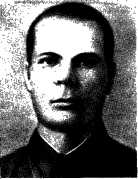
Grigory Tarasenko
p Thanks to the help of comrades and his own strong will and persistence, he managed to finish a secondary school.
p In 1934, he became a schoolmaster in the village of Lyubimovka, Zaporozhye Region.
He gained a commission in the army when war broke out and was seriously wounded in one of the battles on the distant approaches to Rostov-on-Don. After regaining consciousness in the sick bay. Lieutenant Tarasenko asked for a pencil and, with feeble hand, wrote his last letter to his son. The letter, tucked inside his Party card, was kept by nurse A. Khudyakova and passed on to the dead man’s son.
Notes
| < | > | ||
| << | >> | ||
| <<< |
SERGEANT NAZAROV'S LETTER
TO HIS GIRL-FRIEND |
TESTAMENT OF TANK COMMANDER
JUNIOR LIEUTENANT GEORGI MOROZ |
>>> |