FROM NIKOLAI BUKIN, ONE OF THE KHERSON
UNDERGROUND LEADERS
p Early 1943
Even if they tear me to pieces, they won’t get anything from me!
p Nikolai Bukin hailed from the Soviet Far North, the settlement of Nivsk in Kandalaksha District. After crowning an excellent school career in 1939, he volunteered for the army.
As soon as war began he was right in the thick of the fighting. In a letter home sent on September 16, 1941, he wrote: "Now we have to fight and fight to the death, for to die in battle is an honour, to live in slavery is a sin. ... I go to my death like all those who defend every inch of Soviet soil from the swine who strive to enslave and destroy our fathers, mothers, sisters and brothers. ...”
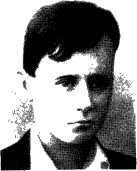
Nikolai Bukin
p While defending the lower reaches of the Dnieper, the young soldier was seriously wounded and taken prisoner. But not for long. He escaped and made contact with the Y.C.L. members of Kherson and, together with Ilya Kulik, headed the young underground fighters. The patriots derailed enemy trains, stuck up leaflets in the streets of the town and assassinated nazis.
p One day the Gestapo tracked Nikolai Bukin down and tried to take him alive. "To die in battle is an honour,” was the young man’s motto. And he 110 saved his last bullet for himself. He regained consciousness in a condemned cell. The Gestapo nursed him back to health in order to squeeze the names of other underground fighters from him. But he didn’t lose heart and was constantly trying to keep his neighbours’ spirits up. He managed to communicate to them his last, courageous letter.
A survivor of the Kherson underground, Klava Shapovalova, wrote to Nikolai Bukin’s parents about the last days of their son’s life: "I remember seeing him one day.... And you know, no matter how brutally they battered him, I never once saw a spark of fear of death in his eyes. People like Nikolai don’t cry. That’s how he will always remain in my memory....”
Notes
| < | > | ||
| << | >> | ||
| <<< |
INSCRIPTIONS
ON THE WALLS OF PRISON BARRACKS IN CHISTYAKOVO, DONBAS |
NINA POPTSOVA'S LETTER
FROM PYATIGORSK GESTAPO DUNGEON |
>>> |