FROM GUARDS MAJOR DMITRI PETRAKOV
TO HIS DAUGHTER LUDMILA
p September 18, 1942
p My little black-eyed Mila,
I’m sending you a cornflower.. .. Just imagine-the battle’s on, enemy shells bursting all around, craters around us and a flower growing here.... And suddenly an explosion .. . the cornflower is torn off. I picked it up and put it in my pocket. . . . The flower had grown, reached for the sun but had been torn off by an explosion, and if I hadn’t picked it up it would have been trampled upon. That’s how the nazis treat children in the villages they occupy. They murder and trample little children into the ground.. .. Mila, papa Dima will fight the nazis to his last drop of blood, to his last gasp, so that the nazis won’t treat you like this flower. What you don’t understand your mama will explain.
p Before the war Dmitri Petrakov taught at a college in Ulyanovsk. He was an extremely kind-hearted man. When war broke out he was made educational officer and later regimental commissar.
p On September 18, 1942, his battalion attempted to take a hill. Every inch of land had to be gained by furious fighting. For twentyfour hours the battalion soldiers three times warded off counterattacks. Defying the fire of six-barrelled trench mortars and bombs, the small group edged their way forward. When hand-to-hand fighting ensued, the commissar deliberately ran the risk of calling artillery fire upon his group. He telephoned the artillery and told them to shell the area where he was fighting with his men. Only exceptional gunnery on the part of the Soviet artillery, who wiped out the attacking nazi groups, saved the lives of the heroes. And the hill was taken.
85p In this encounter Dmitri Petrakov received concussion. When he came to in the medical tent he wrote these few words to his daughter Ludmila, referring to his last battle.
p In October 1942, General Gurtyev’s Siberian Division in which Dmitri Petrakov was serving clashed with the nazi troops in the factory district of the town. High explosive bombs were crashing all around, walls of buildings came tumbling down and nazi tanks crawled on over the rubble.
p Communications were broken. It was then that Major Petrakov led his men into a do-or-die assault on the enemy’s rear. The buildingthe key point of resistance-was captured.
p In the summer of the following year. Major Petrakov’s regiment began to push towards Orel. The nazis threw all they had into defence, employing more and more Tigers and Panthers. It had to be broken down.
p Major Petrakov crawled from trench to trench urging on his officers and men:
p “It’s only about five miles to Orel. Two or three hours of hard-fought offensive will save us many losses and won’t give the Germans a chance to destroy our ancient Russian town. Forward to liberate it!”
These ardent and moving words from their commissar brought a superhuman effort from the soldiers who smashed the enemy’s resistance and broke through to the outskirts of the city. Then they pressed on into the streets and squares. But Major Petrakov was dead, killed as he reached the centre of the city.
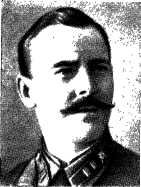
Dmitri Petrakov
Notes
| < | > | ||
| << | >> | ||
| <<< |
NOTE
FROM BATTALION COMMISSAR IVAN SHCHERBINA TO THE INFANTRY DIVISION COMMAND |
VASILY KRIVOPUSTENKO'S INSCRIPTION
IN A NOVOCHERKASSK GESTAPO CELL |
>>> |