FROM LEONID SILIN
August 30, 1941-March 7, 1942
TESTAMENT LETTER
p My dear ones at home,
p Greetings, though when you read my letter I shall no longer be alive.
p But through death, too, through my absence, I embrace you all, my dear ones, I kiss you. Not as a ghost but as your own live and dear daddie.
p My boys and Anya, don’t think I went away to this awful war out of some desire to cover myself in glory.
p I knew I was probably going to my death.
p I love life more than anything, but more than life I love you, Anya and my boys.
p And knowing what terror, what humiliating torments awaited you if Hitler had his way, knowing how they would torture you, how they would treat your mother, knowing how your mother would shrivel up and you be turned into little skeletons, I, out of love for you, had to leave you, though wanting to be with you, had to go away to war.
p I went to war, that means to my death, so that you may live.
p These are no fancy words. For me these words are now clothed in flesh and blood, in my own blood.
p My dear Annushka, I know you will have it hardest of all. I know. But for you to be safe I am going into the fire....
47p I have nothing else to add. Only to say there was no one else in the world I loved so much and found it so heartbreaking to leave behind for good, to leave behind alone, as you, my love.
p Lenya, my elder son and helper,
p We called you Lenya, like me.
p So you will be me when I’m gone.
p Our good, kind mummie has gone through a lot and dreamed so much of an easy peaceful life, but she never had much of a chance with me. I want you to make her happy.
p I want her to find in you her best friend and helper. I realise it’s not easy for children to grow up without a father, specially for boys. But, remember, I have died for you so that you lads can grow up-whether it be hard or not-so that you can grow up and not die from German bombs.
p I have died as befits us men, defending our children, our wives, our homes, our land.
p I want you too to live just as your dad lived and died.
p Remember, your mum is my best friend, she’s dearer to me than anyone else has ever been. So mum knows what’s good and what’s bad, what I’ve done and what I haven’t, what I’d have approved of and what I wouldn’t.
p Always and in everything consult your mummie, don’t hide anything from her, confide in all and share everything with her.
p Never mind if she is a woman, she’s a special woman, she’s our mum, our beloved, clever mummie. She will understand everything.
p Lenya, there’s so much I must tell you, and I can’t say it all, and a lot you won’t understand anyway.
p I have many things I’d like to tell you. But your mother will do this for me.
p These are my parting words to you: don’t forget your mum, Lenya Silin, look after her, see she is alright all her life. Love and obey your mum always.
p Lenya Silin, my helper and elder son, farewell my little boy, and don’t forget me.
p Genya, my younger son and helper,
p I leave you behind quite a toddler. You won’t even remember your father’s face or voice. But your elder brother, my elder son and helper, Lenya Silin, will tell you what your daddie was like, how much he loved you and what sort of 48 man he was. Mum will let you know how your father lived, worked and struggled for a better life.
p All I’ve written to your elder brother goes for you, too. If you listen to Lenya Silin and your mum I’m sure you will be a good, brave and decent man.
p My boys Lenya and Genya,
p Work well at school, study German very carefully, German culture and German sciences. And you must use it all to defeat and destroy German fascism.
p Try to learn from the Germans their most dangerous and terrible weapon-their organisation and precision.
p And, when you feel you are strong enough, use all you have against the nazis. Don’t forget, my sons, as long as nazi Germany remains, as long as one armed nazi remains, as long as even one nazi laboratory or factory carries on unchecked, then Europe, the world, mankind and you personally, and your mummie, your wives and children will live in mortal, terrible danger.
p Never forget: fascism in general, and German fascism in particular, is a deadly, ravaging leprosy, the black plague, which threatens all mankind.
p May your father’s blood, may your father’s ashes be a reminder to your little hearts, my lads, and may the last armed nazi feel your terrible revenge.
p My boys and Anya, the main thing without me is to keep calm and organise your life in an orderly way, no matter what you do.
p We, and myself in particular, came to grief because of the stupid and cocksure system of leaving everything to chance, disgusting organisation and the cackle-handedness of certain commanders who haven’t got the faintest idea about modern war and underestimate the enemy.
p I believe the enemy will be smashed and we shall win. If not, destroy the enemy wherever and whenever you have the chance.
p Boys, listen to our dear, beloved mummie. She means everything to me, my nearest and dearest.
Annushka, my dear one, farewell!
p My darling, my honey,
p Bring up our sons so that I would be proud of them even though I’m not there, so that I would be pleased with my 49 strong, brave and optimistic lads, terrors of the foe and tender and kind to people.
p Be happy and healthy, look after yourselves. Farewell, love and kisses for the last time. To you, Gena, you, Lenya, you, Anya. Farewell!
p
Yours,
Dad
Forever Yours,
Lenya Silin-Senior
August 30, 1941
NOTE
p My dear wife Anna and boys Lenya and Gennady,
p I want to hug and kiss you for the last time. Today I am to be shot by order of the German Command.
p Boys, grow up and get your own back on all fascists for me. As I part from you I am entrusting you with all my blessed hatred for these vile swine. Cut them down to the last fascist. I’ve lived honourably, fought honourably and die honourably.
p I die for our country, for our Party, for all Russians, Ukrainians, Byelorussians and all other people in the country, and for you. Love our country like I love her, fight for her like I have and, if need be, die for her like me.
p Boys, love and respect and obey your mother, she’s going to have a hard time bringing you up, but our country and comrades whom I’ve saved, won’t leave you in the lurch. Remember every soldier must have one motto: I die but don’t surrender. I didn’t surrender. I had a concussion, couldn’t walk and it wasn’t right to desert my badly wounded companions. When we were prisoners I set up a Soviet colony and saved many lives. I stood by them to the last minute, I’ve done all I could for my country. Time’s running out.
p My dear ones, be decent Soviet people, grow up to be Bolsheviks! Anna, farewell! Lenya and Gennady, good-bye! Long live our country!
All my love,
Your husband and father
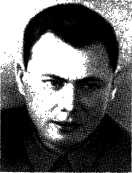
Leonid Silin
p Leonid Silin joined up in the early days of the war. He came from a Riga family, his father being a minor official. He grew up in the same district as several German families and so came to have a good knowledge of German. Before the war he served in the Navy at Sevastopol, then worked at the Moscow Bearing Works and took a correspondence course in the Moscow College of Law. Because of a weak heart he was exempted from army service but he was one of the first to sign up when war broke out, hiding his health record. But the doctors found this out and he was discharged. It would have taken more than that to keep Leonid Silin out of action. He succeeded in his second attempt to get to the front, this time as a lawyer. These were trying years for the Soviet Union. Three months of war had brought the enemy half-way through the Ukraine. Silin’s unit could not hold onto the right bank of the Dnieper and in September 1941 had to beat a retreat to Poltava. A large group of badly wounded soldiers was cut off and had to hole out in the village of Krestitelevo. The wounded lay in long barns and listened to the roar of the fighting. Finally they heard German speech. What were they to do? The enemy was likely to burn down the barns thus murdering dozens of wounded. A decision was taken in a flash. Leonid Silin rose from the straw, opened the barn door and, limping badly and leaning on a crutch, went out of the barn.
p In faultless German he called out to the Germans that there were only badly wounded soldiers in the barns and asked them to hold their fire. The sudden appearance of a Soviet officer speaking fluent German took the sergeant-major by surprise and the firing stopped. Silin was taken to headquarters.
p Back at H.Q., Silin endeavoured to prove himself before the senior German officers a German sympathiser. He praised the German successes and requested only that he be permitted to organise a hospital for wounded Soviet prisoners-of-war (he put himself forward as a wounded Soviet doctor). He knew full well what to expect if the Germans got wind of his complete medical ignorance. But he had to save people and it was well worth the risk. The Germans seemed pleased with the “doctor”, so smart and excellently versed in German. They gave him permission to set up what passed as a hospital.
p From among his fellow prisoners, Silin selected a group of surgeons, nurses and orderlies for his staff. Thus came into being Silin’s 51 “Ukrainian” hospital. The nazis refused to allow any wounded Soviet officers, Communists, Jews or Russians here. And so the staff had to disguise every new entry under a Ukrainian name.
p In November the occupational forces gave permission for the hospital to be moved to the village of Yeremeyevka where it was housed in a big, two-storey school. Now the wounded had a roof over their heads and there was more food to go round as the village was some distance off the beaten track, which meant less frequent raids from German requisitioning officials.
p Leonid Silin was playing for time to allow the wounded to get back their strength, hoping some time later to escape from the hospital in a body and join up with the partisans in the woods. The medical staff began to engage in underground activities. They managed to get hold of a receiver and listened in to Sovinformbureau news, which they passed on to the rest of the hospital and the villagers as well. From the German stores sacks of corn began to disappear and policemen would misplace their rifles and submachineguns.
p So as not to bring down the wrath of the nazis on the hospital, Silin and his confederates had to be extremely careful. Nevertheless, the German-appointed senior police officer of Yeremeyevka, the traitor Atamas, nicknamed the “Dragon”, sensed that Silin was playing a double game. Wanting to curry favour with the Germans, Atamas began to watch Silin and gather evidence. One of the hospital staff also turned traitor.
p On the night of March 2, 1942, the hospital was surrounded by German soldiers and Ukrainian police. The nazis subjected all the patients to a thorough examination and found that some were quite fit and also that there was quite a number of Russians and Jews. This discovery meant death for the hospital staff. On the next day, March 3, about 40 wounded and doctors picked out by the Germans, were taken from the hospital to the Kremenchug p.o.w. camp.
p Leonid Silin remained courageous to the end. As he was being led out to the sleighs on which the wounded lay, he asked leave to bid farewell to those remaining. Addressing the villagers gathered on the village square and his wounded comrades, he called on them to continue the struggle against the invaders and keep faith in the victory of the Red Army. Seeing the enormous effect his speech was having on the people, the German officer cut him short and refused him further time. As the sleigh started to move Leonid Silin bit through a vein in his wrist, soaked his handkerchief in blood and, throwing it into the crowd, cried: "See it gets to my sons.”
p The brave Riga man was shot on March 7, 1942, together with doctors Portnov and Gekker, a wounded Lieutenant-Colonel K. Bogoroditsky and others.
A day later, an escapee from the Kremenchug camp brought Silin’s note to Oksana Romanchenko, a nurse at the hospital. He had managed to write it before he was shot and pass it on to some comrades with the request to get it through to nurse Romanchenko. The note was written in pencil on sheets of paper and addressed to his wife and children. When Soviet forces liberated Yeremeyevka, nurse Romanchenko dispatched the note to the Moscow address indicated.
Notes
| < | > | ||
| << | >> | ||
| <<< |
NOTE FROM SOLDIER
ALEXANDER VINOGRADOV |
LAST ISSUE
OF A HANDWRITTEN NEWSSHEET ``OKOPNAYA PRAVDA'' PUBLISHED BY YOUNG PIONEER VALERI VOLKOV |
>>> |